Go-to-market guide for B2B teams
Use this guide to decide where to start with B2B outreach. Pick the question you need to answer or follow the series in order.

Go-to-market guide: where do you start?
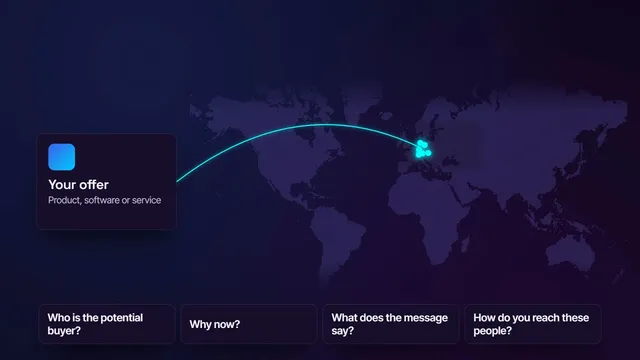
In one minute, the film shows where to start in the guide.
Transcript
Customer So where do we start?
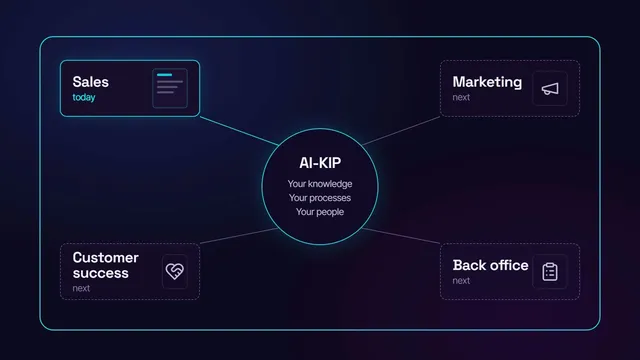
Narrator Right where you are: with the go-to-market topic that's on your mind right now. The guide takes you through go-to-market in seven parts: market, moment, person, facts, message, channel and sender. Each part comes with a short film and an article. If you are just getting started, begin with part one. If you already have a plan, check it against the checklist. And three deeper articles show what AI can take on, how your tools work together, and what an integrated platform like AI-KIP gives you. It all starts with the first part: your market. We'll work out your real market potential. Get your free report on your total addressable market. Now. AI-KIP. The Agentic Go-to-Market Engine.
In brief
B2B teams can use this go-to-market guide to choose what they need to settle before contacting a target account. Use part one to start building your account list, or open the outreach checklist to review a plan you already have. If your team has a specific question, go straight to the topic that covers it.
Start with the decision your team needs to make before the next round of outreach. You may have accounts in the CRM and still have an open question about when to approach them. You may also have a draft message and need to check who should send it. Each topic card tells you which piece of work the article helps you tackle.
Three situations
Which decision is coming up in your next meeting?
Suppose your team is preparing an outreach campaign. These fictional situations show how to pick a reading task for your next planning session.
Getting started
Your sales team has drafted a plan and needs to agree who will check the gaps before launch. Open the go-to-market checklist for B2B outreach. For the planning session, record one open question on the worksheet and name who will answer it.
Core series
A target account has announced a new site and you are deciding whether to get in touch. Open B2B buying signals and check whether the announcement points to a current task your offer could help with.
In more depth
An account manager already has a conversation under way. The sending tool suggests contacting the same account again. Use the CRM handover test to check what your tools pass on when work changes hands. Follow the handover with a test account.
Before you start · 2 starting points
Clarify roles, review your plan
If the first discussion is about who owns a decision, read go-to-market vs sales. The comparison sets out the decisions leadership, sales and customer success make and what each team needs at handover. Use it when your team needs to agree who chooses the segment and who leads the conversations with those accounts.
Go-to-market vs sales
Compare the decisions leadership, sales and customer success own, and see what each team needs from the others.Film · 1:09 min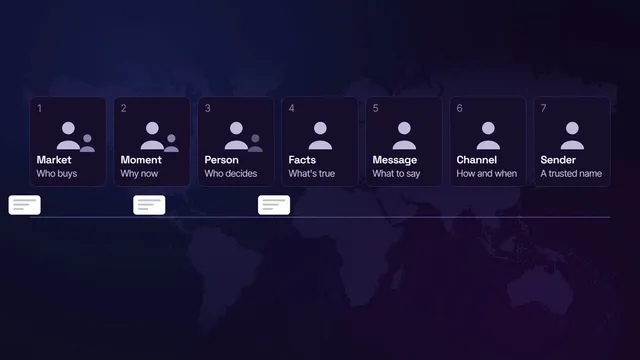
Go-to-market checklist for B2B outreach
Use the worksheet to record your evidence, mark what is still open and put a name to each next step.Film · 1:16 min
The series · 7 parts
Go-to-market in seven parts
The seven parts take you from choosing target accounts to choosing the sender. Start with roles and a worksheet, then explore team responsibilities, tools and the build decision.
- 01MarketWho buys
How to build a target account list
Build a target account list by starting with customers who saw a measurable benefit and testing what new accounts have in common with them.Film · 1:00 min - 02MomentWhy now
B2B buying signals
Check what a change tells you, how long the information is useful and whether it gives you a reason to contact the account.Film · 0:45 min - 03PersonWho decides
How to find decision makers in a company
Map the people involved in a purchase and work out who can support, stop or approve it.Film · 0:35 min
If your team is preparing its first approach, read the articles in film order. Start with how to build a target account list. Part one shows how to use a proven customer outcome to work out which companies belong on your list. Part two helps you decide which recent changes in those companies deserve a closer look.
Once you have an account in mind, part three helps you find the people involved in a purchase. Use it to work out who can support, block or approve the purchase. When you have a fact you need to verify about the account, turn to account research for sales in part four. The article shows how to find a source that covers the specific claim and record any question that remains open.
The next three parts help with different decisions about the approach itself. Compare cold email examples by buyer role in part five if you want to see how the same problem reads for different recipients. Use part six to choose a channel and plan a follow-up, including when to stop. Read part seven to choose who sends the email and can take responsibility for the reply.
- 04FactsWhat’s true
Account research for sales
Find sources that can confirm company facts and record where the evidence still falls short.Film · 0:24 min - 05MessageWhat to say
B2B cold email examples by buyer role
Compare short example emails to see how the same business problem changes when you write for a different buyer.Film · 1:09 min - 06ChannelHow and when
Multichannel outreach for B2B sales
Choose a first channel, plan a follow-up and decide what should make you stop the sequence.Film · 0:40 min
Afterwards · 3 in-depth topics
Team roles, tools and building in-house
The articles in the final group are for teams deciding how to run the work. In AI in sales, you can see how a team decides what AI can draft and who checks it. The build versus buy comparison helps if you need to weigh what each option will demand after the prototype. Bring the comparison to a discussion about who will maintain the data, review drafts and resolve faults.
AI in sales: examples for your team
Set out what AI can prepare, who reviews the draft and what brings the work back to your team.Film · 0:31 min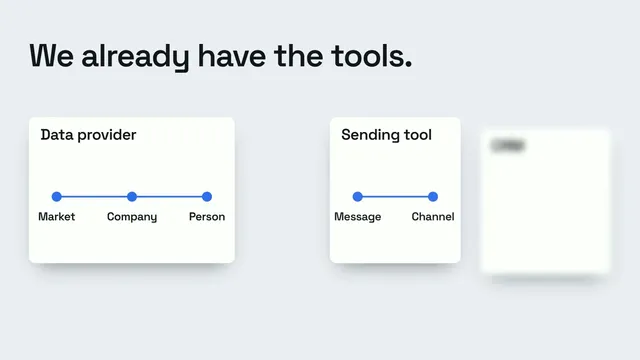
Sales stack integration: the CRM handover
Use one account to test what your tools pass to the CRM and whether the handover prevents duplicate outreach.Film · 0:42 min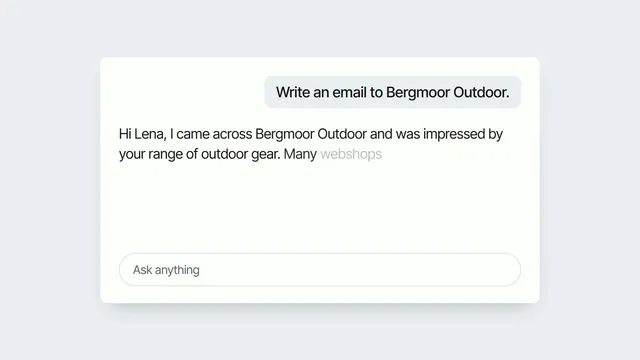
Build vs buy sales automation
Use a decision matrix to weigh the data upkeep, draft reviews and fault handling each option will need over time.Film · 0:26 min
What comes next
The series prepares your team for the first approach. If your next discussion is about what happens once a conversation is under way, read the whitepaper for the wider view.
The whitepaper shows how to measure the steps from first contact to first customer value. Go to the whitepaper
Explainer films
For background before starting the series, use the films on what go-to-market means, total addressable market and the B2B outreach process. You can read about the platform on the AI-KIP product page.
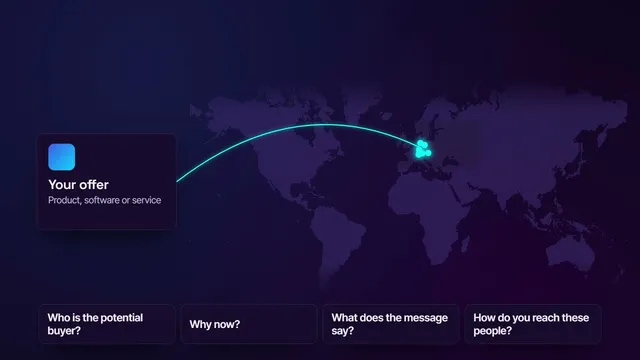
What is go-to-market? A go-to-market strategy explained in three minutes
Go-to-market for beginners: the four questions, the seven parts that decide success, why growth used to mean hiring more people, and how an agentic platform runs all seven parts for every company in your market, every day.

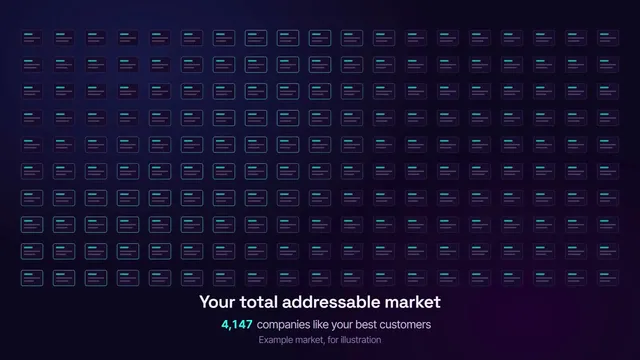
How many companies could buy from you? Your total addressable market
Most sales teams only work the accounts they already know. AI-KIP learns from your best customers, works out your real market potential, watches more than a million signals a day and reaches every company that has a reason to talk right now: by email, LinkedIn or phone.
Class, not mass: B2B outreach that buyers actually answer
Why buyers ignore forty templated messages a week, and how AI-KIP, the agentic go-to-market engine, finds every company that fits your market, spots the reason to write today and drafts a relevant message in each rep's own voice: right person, right channel, right moment.

The go-to-market whitepaper
In ‘Running the bowtie’, Michael Uenk shows how shared stages help teams spot bottlenecks before and after the deal.
Contents
- Plan goals, target customers and outreach on one page
- Build a customer profile and find market segments from customer outcomes
- Assess buying signals, buying roles and existing relationships
- Assess growth, market saturation and scenarios
- Consider customer impact, acquisition costs and the work of serving a customer over time
- Connect data, analysis and execution
Read an excerpt in English · Chapter 1
Ask any leadership team where their growth will come from next year and you will get a confident answer. Ask them to prove it, though, and the room goes quiet: which segments, which accounts, what probability, on what evidence. That silence is a company navigating by feel through a market it has never measured. It is built into how commercial organisations are wired, as four structural blind spots that reinforce each other.
Gut feeling at the top. Companies are steered by their leaders' accumulated experience. Up to roughly ten million in revenue, an exceptional individual can carry the business on experience and instinct. Beyond that point the system matters more than any one person, and instinct starts to fail in three ways. It cannot be falsified, so when a plan built on it misses there is no assumption to examine. It leans toward the familiar, which leaves it blind to the adjacent segments that are often the real opportunities. And it does not transfer to a new hire, a new market, or a new country. Experience is a good generator of hypotheses. The mistake is treating instinct as evidence.
The CRM: a rear-view mirror with missing pages. The CRM holds a partial history of a small slice of the market. It has nothing on the 95% or more you never met, and what it does hold is stale the moment it is written. More to the point, it records that you won without recording why. The situation, the problem, and the event that made a deal urgent all live in call recordings and in reps' heads rather than in dropdown fields, and they sit walled off from delivery, usage, and finance.
Request the whitepaper. We will send it to you personally by email.
You can also request the whitepaper by email at info@ai-kip.com.
Frequently asked questions
If your B2B team has an outreach plan to review, start with the go-to-market checklist. You can use its worksheet to record the evidence and give each open question an owner. If you are still deciding which companies to approach, start with part one and work through the example of building a target account list.
B2B teams preparing their first approach can read the seven parts in order, from choosing accounts to choosing the sender. Bring the article that matches your current decision to the next team discussion. If you already have your account list and want to decide when to make contact, go straight to part two on buying signals.
The whitepaper helps B2B teams see where progress slows on the way to first customer value. The guide helps your team prepare its first approach. The chapter ‘Running the bowtie’ looks at the time between defined stages before and after a deal closes. Sales and customer success can use the same figures to investigate delays together.
Your target market
Based on your details, the free report shows which companies belong to your target market.
Request your free report