What is go-to-market? A go-to-market strategy explained in three minutes
Go-to-market for beginners: the four questions, the seven parts that decide success, why growth used to mean hiring more people, and how an agentic platform runs all seven parts for every company in your market, every day.
Transcript
Customer: My team works hard, but new customers come slowly. Everyone tells me I need a go-to-market strategy. What does that actually mean?
Narrator: Go-to-market is how your offer, whether product, software or service, reaches the right customers. It answers four questions: who is the potential buyer, why now, what the message says, and how you reach these people. Without a plan, sales runs on luck: the founder's network, the odd referral, a mass mailing nobody reads. With a plan, you write only to the companies that fit, and only when there is a reason. That makes new customers repeatable. For decades, this was done by hand. Bought lists, trade fairs and cold calls. Someone researched every company, someone wrote every message. Seven parts decided success: the right market, the right moment, the right person, true facts, a message worth reading, the right channel, and a sender name people trust. Every part took people and time. So growth meant hiring more people. And most of the market never heard from you.
Customer: That's exactly where we are: my team is fully booked, and most of the market doesn't know us.
Narrator: AI-KIP is an agentic platform. All seven parts work together seamlessly, for every company in your market, every day. The platform finds every company that looks like your best customers. Then it watches what happens there: a second warehouse, a job opening, a change in leadership. Signals like these are the reason to write. Without a reason, no message goes out. If there is one, it picks the person who decides, and checks every fact. Then it writes in your tone of voice and in the contact's language, picks email, LinkedIn or phone and the order, and protects your sender name.
Customer: And who checks all that?
Narrator: Approve every draft until it nails your voice. After that, you only step in when it flags a question. Before: a whole team, for weeks, for a hundred companies. Today: AI-KIP, every day, across your whole market, with every signal.
Customer: So my team only talks to people who have a reason to listen?
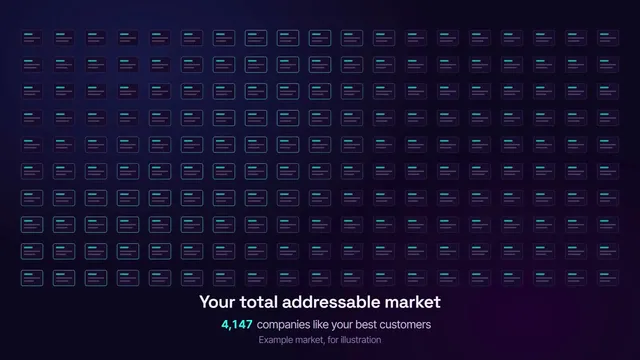
Narrator: Exactly. Not mass, but class. It all starts with the first part: your market. We'll work out your real market potential. Get your free report on your total addressable market. Now. AI-KIP. The Agentic Go-to-Market Engine.
More films

How many companies could buy from you? Your total addressable market
Most sales teams only work the accounts they already know. AI-KIP learns from your best customers, works out your real market potential, watches more than a million signals a day and reaches every company that has a reason to talk right now: by email, LinkedIn or phone.
Class, not mass: B2B outreach that buyers actually answer
Why buyers ignore forty templated messages a week, and how AI-KIP, the agentic go-to-market engine, finds every company that fits your market, spots the reason to write today and drafts a relevant message in each rep's own voice: right person, right channel, right moment.